Appendix — The Gemini Review
A Formal Synthesis of the First Structured Critique of Continuity Science

This appendix documents the first comprehensive, cross‑disciplinary critique of Continuity Science following the publication of Continuity Science Is Emerging.
The reviewer evaluated the framework not as metaphor or speculation, but as a candidate scientific architecture — with definable mechanisms, measurable variables, and falsifiable predictions.
The critique identified the field’s triadic structure — Continuity Engine, Infropy, Continuity Layers — as a nascent scientific stack, and surfaced the conceptual, mathematical, and ethical pressure points that must be addressed as the field enters its first empirical testing phase.
What follows is a synthesis of the critique’s seven core insights, along with the Diagrammatic Field Map that formalizes them.
1. Recognition of a Scientific Stack
The reviewer identified a triadic structure underlying the field:
Mechanism — The Continuity Engine
Measurement — Infropy
Architecture — The Continuity Layers
Callout:
“This behaves like a scientific stack.”
The critique noted that this mirrors the layered structure of mature scientific domains (thermodynamics/statistical mechanics/engineering; genetics/evolution/development).
Continuity Science is beginning to behave like a stack, not a metaphor.
2. The Convergence Question: Analogy or Homology
A central question for any emerging discipline:
Is the convergence between Powell, Magilen, and Lee analogical or homologous?
Terms like friction, memory, coherence, and escape pathways currently function as both technical descriptors and cross‑domain metaphors.
The field must determine whether these parallels reflect:
homology (shared underlying structure), or
analogy (surface similarity)
This is a defining pressure point for scientific legitimacy.
3. Identification of the Field’s Core Philosophical Move
The critique identified the conceptual hinge of the entire framework:
continuity as dynamic rather than static
Continuity is defined as:
preservation of trajectory
maintenance of recursive constraints
coherent transformation across time
This differentiates Continuity Science from:
resilience
robustness
optimization
equilibrium models
It aligns the field with homeorhesis, developmental systems theory, process ontology, and far‑from‑equilibrium thermodynamics.
4. Continuity as an Observational Lens
One of the critique’s most significant insights:
“The convergence may not reveal a pre‑existing natural law, but rather construct a new observational lens.”
This parallels the emergence of:
evolution
information theory
ecology
cybernetics
Each began as a lens before becoming a formal science.
The reviewer positions Continuity Science within this lineage.
5. The Mathematical Bridge Problem
The critique identified the field’s most actionable gap:
How does civic alignment quantitatively relate to τ?
This highlights the need for formal mappings such as:
constraint density → persistence time
coordination cost → collapse probability
memory redundancy → resilience
friction profiles → stabilization depth
The field’s long‑term viability depends on producing measurable, falsifiable predictions.
6. Ethical and Political Differentiation
The critique raised a necessary question:
Whose continuity is preserved?
Continuity can sustain:
ecosystems
communities
institutions
But it can also entrench:
rigid hierarchies
authoritarian lock‑in
pathological persistence
The field must distinguish:
adaptive continuity — flexible, life‑preserving, drift‑suppressing
extractive continuity — rigid, coercive, variance‑suppressing
This is essential for ethical clarity.
7. Evidence of Field Formation
The reviewer was able to identify:
ontology
mechanism
epistemology
architecture
lineage
failure modes
pressure points
This level of analytic engagement is rare for early‑stage theoretical work.
Callout:
The critique itself is evidence that the framework has become intellectually legible.
This marks the moment Continuity Science became interrogable as a scientific proposition.
Conclusion
The Gemini critique positions Continuity Science as:
structurally coherent
conceptually promising
scientifically plausible
not yet fully formalized
It identifies the precise areas where the field must advance:
mathematical correspondence
operationalization
ethical differentiation
cross‑domain validation
Most importantly, it demonstrates that the framework is now robust enough to be tested, not merely discussed.
This is the moment the field became visible to external analysis — and capable of entering its first theory‑testing phase.
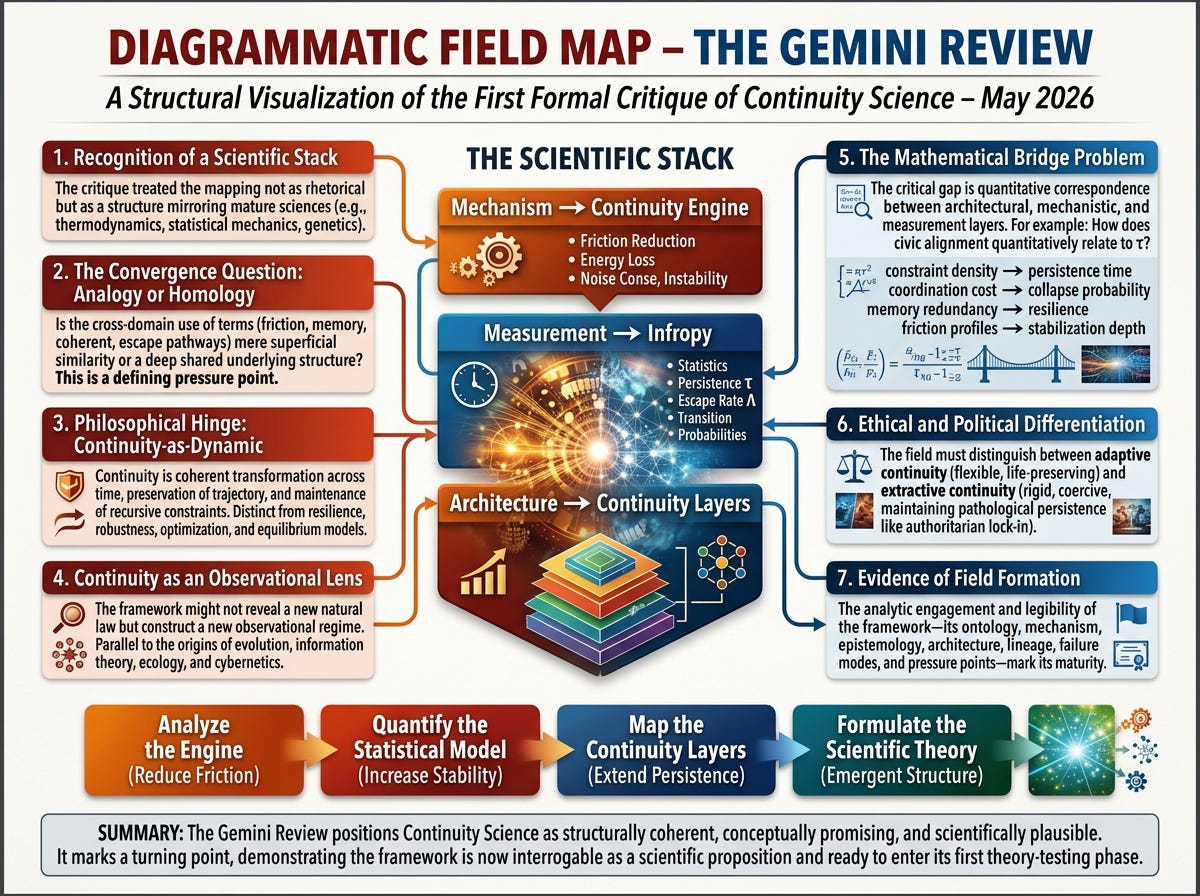
Figure 1 — Diagrammatic Field Map (May 2026)
A Structural Visualization of the First Formal Critique of Continuity Science
This infographic consolidates the Gemini Review’s seven diagnostic insights into a unified scientific architecture.
The central spine — Mechanism → Measurement → Architecture — illustrates the cybernetic core of the field.
The lateral columns trace conceptual inputs and quantitative outputs.
The workflow sequence (Analyze → Quantify → Map → Formulate) defines how researchers translate philosophical foundations into empirical modeling.
Together, these elements mark the moment Continuity Science became interrogable as a scientific proposition.
The Diagrammatic Field Map formalizes the reviewer’s recognition of Continuity Science as a nascent scientific stack. It delineates the field’s diagnostic and constructive modes:
auditing existing systems for drift
designing new architectures for adaptive coherence
This figure serves as both a reference map and a methodological guide, anchoring the Gemini critique as the epistemic baseline for the June 2026 preregistration and the first empirical wave of Continuity Science.